The Tiger Cubs - Part 1

When Julian Robertson shuttered Tiger Management in 2000, he didn't just close a fund. He built a factory.
His former analysts founded some of the most successful hedge funds in history. They came to be known as the "Tiger Cubs."
He also leased Tiger Management's office on 101 Park Avenue to aspiring hedge fund founders, backed their new funds, and inadvertently created what would become the most powerful network in hedge fund history. These funds became known as Tiger Seeds.
Some Tiger Cubs are also Tiger Seeds. The most famous is Chase Coleman's Tiger Global Management.
He's where we start.
Note: all performance figures are related to long/short, not long-only.
ANNOUNCEMENT: JOB LEAD!
Are you (or do you know) an established research analyst doing unique work that the buy-side values?
I am working with a premier boutique sell-side research firm that is expanding its analyst roster. This firm lets you share in the revenue you generate via your research product - it can be in traditional stock and sector coverage, or desk analyst work, strategy/economics, or topic expertise
If you are - or know - someone who might fit this profile, please reply to this email or submit your interest.
Tiger Global Management
Daniel Strachman, the author of Julian Robertson, A Tiger in the Lands of Bulls and Bears, described Chase Coleman as "one of the luckiest and smartest money managers alive." And he is the billionaire founder of Tiger Global Management, a crossover investment firm that ran $86 billion at peak.
Charles Payson "Chase" Coleman III was born in 1975 on Long Island, in Glen Head, to parents who are no commoners.
His father, C. Payson Coleman Jr., was a partner at the law firm Pillsbury Winthrop Shaw Pittman. His mother ran an interior design business. His grandfather? Managing partner of Davis Polk & Wardwell.
And if that wasn't enough blue blood, his mother's side traced back to Peter Stuyvesant, the last Dutch Governor who handed New Amsterdam to the British.
But here's the thing that actually mattered: he grew up in Glen Head with Spencer Robertson. As in, the son of Julian Robertson. The man who would change his entire life.

Coleman followed his father's path to Deerfield Academy, then Williams College, where he graduated in 1997 and was co-captain of the lacrosse team.
Then he joined Tiger Management right after graduation, likely benefiting from being good buddies with the Tiger founder's son. Hope Julian Robertson knew his name instead of calling him “Tiger.”
The $25 Million Bet
This is where luck enters the building.
Julian Robertson closed Tiger Management in 2000. Coleman was 25 years old. Most 25-year-olds worry about rent living in Manhattan. Robertson gave Coleman $25 million to manage.
He launched the Tiger Technology Management LLC in March 2001, running it as a long/short strategy focused on technology. The tech bubble had just burst. The market was in freefall. Dead money everywhere. But internet revolution was in its early innings, especially globally.
Tiger Technology Management worked out of the former Tiger Management office. And Coleman made +52% in 2001.
In 2003, Coleman hired Scott Shleifer, a Wharton undergraduate-to-Blackstone type. Shleifer pitched Coleman Chinese internet company stocks such as Sina, Sohu, and NetEase. Made a killing.
Shleifer had more ideas: expand beyond public stocks. Go after PE and VC.
That decision changed everything.
The Crossover Play
Tiger Technology expanded to payments, education and other sectors and renamed itself Tiger Global Management. It expanded into private equity and venture capital, pioneering crossover investing.
From 2007 to 2017, according to Preqin, Tiger Global raised the highest amount of capital among VC firms. And they were writing checks everywhere.
By 2020, the flagship long/short fund had compounded 26% gross, 21% net, over twenty years. Only two down years.
The Fall and the Resurrection
Then 2022 happened.
Down 56%. Not 5.6%. Fifty-six percent. As a long/short HEDGE fund.
The Wall Street Journal reported that the Tiger Global's losses wiped out roughly two-thirds of the value the fund had compounded over its entire existence.
But Coleman the billionaire is staying in the game:
- 2023: +28.5%.
- 2024: +24%.
- 2025: +7.9%.
Still below the high water mark, but getting there.
In November 2023, Shleifer stepped down from day-to-day and moved to a senior advisor role. Coleman took over both the public equity business and the private side.
The Invisible Billionaire
Coleman is extremely secretive. Barely any photo of him on the internet. Probably he intended that way.
In 2025, he made a public appearance as a panelist at the Robin Hood Investor Conference. People actually commented that it might've been his first publicized appearance. Ever.
At the bottom of this article, you will find the currently active hedge funds founded by Tiger Global alumni.
In addition, Feroz Dewan, former Head of Public Equity founded his investment vehicle Arena Holdings and Lee Fixal, who led Privates, founded Addition, his own VC firm.
Viking Global Investors
What do Norwegian SEALs, Tiger Cubs, and $55B in capital have in common? One career: Andreas Halvorsen.
Andreas Halvorsen was born in Borge, Norway in 1961. He graduated from the Norwegian Naval Academy and led a Norwegian SEAL team.
The Unexpected Path
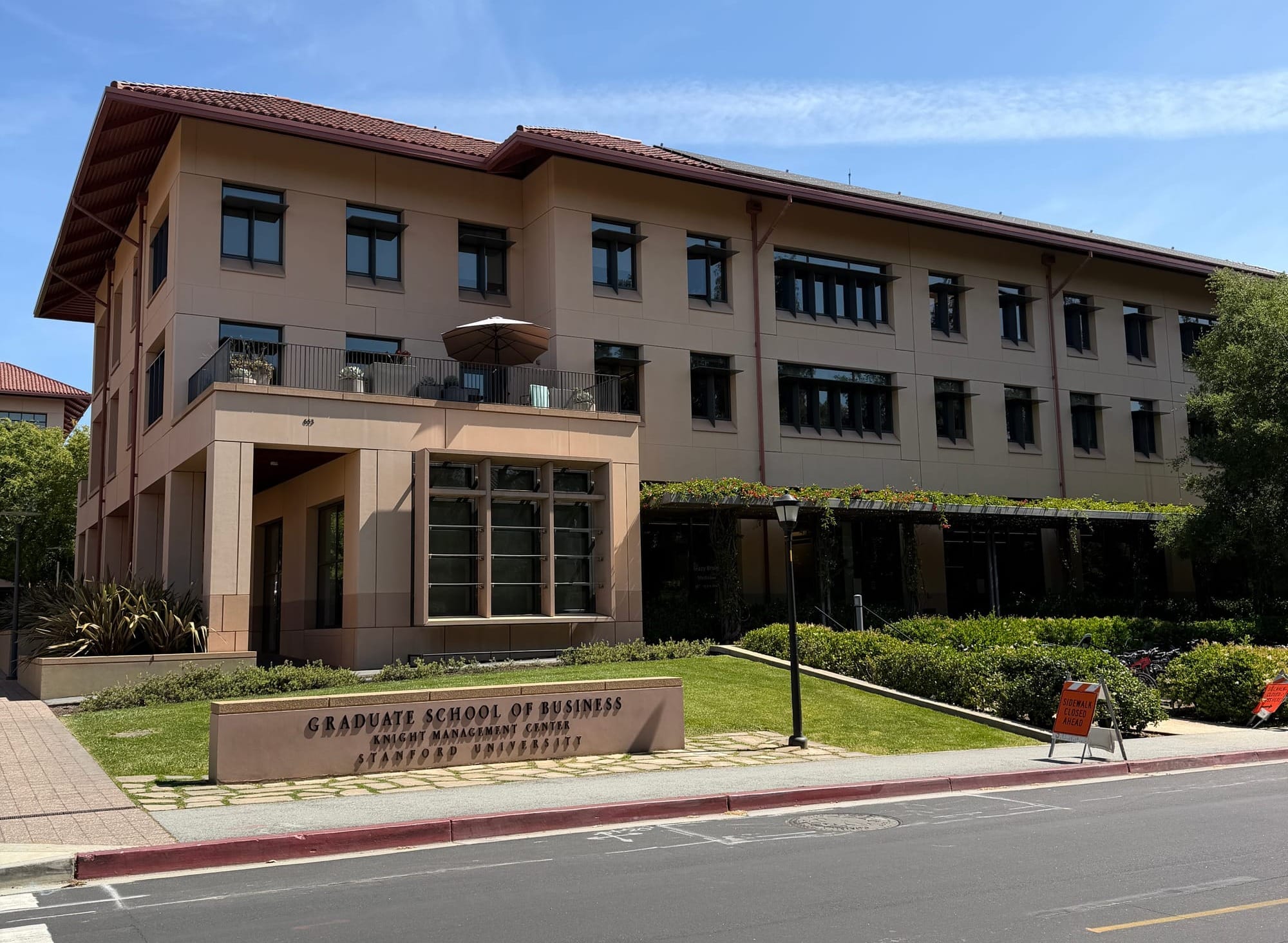
Halvorsen graduated with an economics degree in 1986 from Williams College. He was on the ski team. After that, he went to Stanford Business School and got his MBA in 1990, where he was classmate with John Griffin, Julian Robertson’s right-hand man and founder of Blue Ridge Capital. Halvorsen was an Arjay Miller scholar, top 10% of the class.
After MBA, he joined Morgan Stanley in investment banking.
In 1992, Julian Robertson hired him for Tiger Management.
He climbed fast. By 1995, he was on Tiger's management committee. By 1996, he was the Director of Equity Investment. Robertson praised Halvorsen in investor letter, noting he had "several big hits" as the "youngest Tiger" at the time, barely in his second year at Tiger.
At Tiger, Halvorsen covered European stocks, global Financials, Oil Services and Shipping.
Then in 1999, Halvorsen made a choice that would define everything that came next.
The Bet on Himself
Halvorsen had reached the top of the hierarchy. He could have stayed and gotten richer for another decade under Robertson.
Instead, he left.
Halvorsen took with him David Ott and Brian Olson, two fellow Tiger Management analysts that Halvorsen helped hire. David Ott covered U.S. retail and global restaurants. Brian Olson covered private equity.
Together, they founded Viking Global Investors.

The idea was straightforward: long/short equity fund, each of the three founders ran their own book in their area of expertise. Olson would run TMT. Ott would manage Consumer. Halvorsen would invest in Financial Services.
Halvorsen would be the Chief Investment Officer because he was the most experienced. He contributed $50 million of his own capital. Ott and Olson each contributed $2-4 million.
At Viking, talented analysts had a clear path forward. Become a stock picker. Then become a portfolio manager. Then potentially oversee the entire firm's book as the Chief Investment Officer (CIO)
Each analyst generates investment ideas. They pitch their best idea to the PM. The PM aggregates all the best ideas from their analysts and rank them. This bottom-up approach creates a portfolio of the highest-conviction stocks. PMs constantly reassess their ideas as stock prices move. If a stock doesn't justify its original thesis anymore, it gets cut. Only the best ideas survive.
The CIO oversees all the PMs - mentoring them on how to run money and managing overall portfolio risk.
This created something rare: a place where analysts have a path to PM without having to join a pod shop.
Analysts are sector experts. They also hire research specialists to understand regulatory developments in different industries. They hire investigative journalists to look into management teams.

Over the years, Viking Global became a hedge fund factory. The PMs and CIOs made serious money. Then they left to start their own firms.
Daniel Sundheim was a PM and CIO at Viking. He left and founded D1 Capital Partners. He put in $500 million of his own money and launched with $5 billion AUM. D1 was one of biggest ever single-manager hedge fund launches.
Other former Viking CIOs followed the same path:
- Tom Purcell launched Alua Capital with Marco Tablada, a former Tiger Management analyst and Lone Pine Capital managing director. (That one didn't work out. Alua only made 4% per year from 2020 to 1Q 2026 and shut down in April 2026.)
- Benjamin Jacobs left to found Anomaly Capital Management.
- Ning Jin, the most recent CIO, left to found Avantyr Capital.
The benefit was obvious: if you were good at Viking, there is a path to PM and make big money. And if you wanted to start your own thing? You had Viking and Tiger Cub on your resume. You had money in the bank. That gives LPs assurance on skills and alignment.
Meanwhile, Halvorsen focused on running the firm. Operations. Fundraising. The behind-the-scenes work that lets a hedge fund run at scale. He delegated investment decision-making to the portfolio managers and CIO. He stayed out of the way while staying in control.
At the bottom of this article, you will find the currently active hedge funds founded by Viking Global alumni.
Blue Ridge Capital
Summer 1986. John Griffin was a junior analyst at Morgan Stanley's merchant banking group, barely a year out of UVA's McIntire School of Commerce in 1985.
Want my insider takes?
8,000+ readers get my weekly insights on public equity research.


